Click on
Library Icon
to learn more
|
Introduction
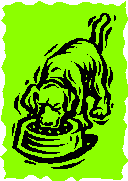
Food bowl aggression, also known
as food-related aggression, is a common problem with
certain breeds of dogs. When a dog has food-related
aggression, he or she will guard his or her food,
treats, rawhides, or bones from other dogs or
people. How the dog shows food
 -related aggression
can be quite variable. Some
dogs begin to growl softly from
a great distance and
increase the intensity of their growling as people
approach. Some dogs growl while shaking and gulping
their food. Some dogs stare and snarl at anyone
within their view while eating. -related aggression
can be quite variable. Some
dogs begin to growl softly from
a great distance and
increase the intensity of their growling as people
approach. Some dogs growl while shaking and gulping
their food. Some dogs stare and snarl at anyone
within their view while eating.
The presence of food is a part
of everyday life. Food bowl and toy guarding can be
a safety concern if small children are around. Even
if you decide not to actively treat any signs of
food-related aggression in your dog, understanding
it can help you to prevent it from escalating.
|
Once a dog over the age of
seven months has developed a
habit of food and toy
guarding, it is much more
challenging to modify or
change this behavior. |
.jpg)
How to prevent food
bowl aggression
It
is easy to prevent food bowl aggression in most
dogs. The strategy is to spend time with the puppy
during feeding by petting, brushing, massaging, and
talking to the dog while he or she eats.
- Before feeding the dog, ALWAYS
ask the dog to "Sit," first. Then hand feed the
first few kibbles before putting the food bowl down.
- Put one kibble in the bowl at a
time to get the dog use to you picking up the empty bowl to put
in another kibble.
- When the dog has kibble in the bowl, call the dog away from
the bowl for an extra special treat.
- If the dog does NOT show aggression, approach the bowl and
add food.
- If the dog does NOT show aggression, approach w
hile
the dog
is eating to drop in a tasty treat such as a piece of
chicken or a piece of cheese.
- Sit in the same room when the
dog is eating. If the dog is relaxed move closer.
How to respond to food and toy
guarding
 For
puppies over four months of age and adult dogs, it is safest to
work with the assistance of a professional. Some
dogs have a genetic tendency to guard valuables. For
puppies over four months of age and adult dogs, it is safest to
work with the assistance of a professional. Some
dogs have a genetic tendency to guard valuables.
Teach the dog,
"Leave it, and Take it" instructions.
Vocabulary can be taught to dogs at any age.
Learn how to use gentle methods that keep learning fun and
successful for you and your dog.
|
 Print
Print Improving Relationships
between People and Pets!
Improving Relationships
between People and Pets!