|
|
|
Feline
Aggression Toward Cats
Introducing A New Cat Into A
Household
-
Introduce the new cat to an
enclosed area (e.g. separate
bedroom or bathroom) for
1 to
2 weeks
that is outfitted with
everything your cat needs.
For an unsocialized fearful
pet,
consider a quiet, dark room
and be patient.
-
Keep household
Pets away from the door of
the new cat's special room.
After 3 to 5 days, begin to
feed both (all) cats meals,
on either side of closed
doors.
Praise all relaxed
behaviors. Remove the
household cats if they show
any aggressive or tense body
language.
-
Allow
household
cat(s) and new cat to
hear
and
smell each other,
but not see
or touch.
Observe body language from
alternate sides of the door.
If either cat is upset, move
the
food back from the door.
Measure the distance from
the door, at which each cat
seems consistently relaxed,
and is ignoring the other.
-
Use a
wash cloth to stroke one
cat. Then use that same wash
cloth to stroke another cat.
Praise any relaxed interest
in the scent.
-
Rotate
a litterbox and cat bed
to
introduce the cats to each
other's scents in a
positive, non-threatening
manner.
-
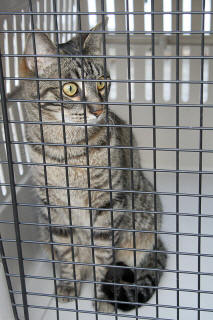 Once all cats are eating
easily and relaxed, allow
the first
sight
of each
other in a very positive,
controlled setting but no contact.
Feed cats away from each
other but with the door
open. Put one cat in a
carrier to eat in sight of
the other. Once all cats are eating
easily and relaxed, allow
the first
sight
of each
other in a very positive,
controlled setting but no contact.
Feed cats away from each
other but with the door
open. Put one cat in a
carrier to eat in sight of
the other.
-
When cats can eat near each
other with relaxed body
posture, begin to allow the
new cat out, while other
cats are locked away. Let
the new cat explore and
relax in the new
environment.
-
At least initially, provide
one litterbox per cat plus
one extra. Remove unused
boxes after 2 weeks of
non-use.
-
Ignore minor squabbles. If
serious fights occur,
separate the cats and follow
the aggression protocols. Links on left.
|
|
|