|
Need Help?
|
|
Call
1-800-372-3706
to
speak to a Veterinary Behavior Technician |
|
Paws To Speak!
Member
Main Menu
|
 |
|
Help is at your
fingertips by library, email and
phone. |
|
Why do it?
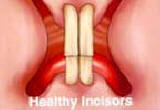
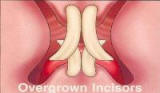
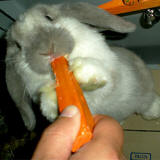
Dental disease is a common medical problems in domestic rabbits because they are not always provided ample opportunities to gnaw on wood or branches. This can result in overgrown incisors and plaque on back teeth.
Plaque
Plaque that accumulates on Pets' teeth hardens, and irritates the gums. Eventually, bacteria start to grow under the gum tissue. The bone may also become infected. If the infection moves into the bloodstream, it can damage the kidneys or the heart valves. The same process affects people, too.
The easiest way to prevent plaque is to brush your Pet's teeth.
-
Start with a relaxed Pet and no toothbrush.
-
Introduce a tasty Pet toothpaste on your finger by massaging the gums.
-
Introduce the finger brush coupled with treats and praise.
-
Begin brushing one or two teeth daily and phase out treats.
-
Increase the number of teeth brushed each session.
-
Always praise cooperative behavior during the brushing.
|
Dental disease is preventable! Provide hay and plenty of commercial items made for rodent chewing. |
Overgrown Teeth
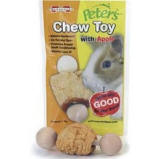
All rabbit teeth grow for the entire life of the rabbit. The molar teeth as well as the incisors can both become overgrown. However, genetics and environment both play a factor so overgrown teeth do not occur in every rabbit. Overgrowth occurs when the teeth become mal-aligned and are not able to wear down evenly. The most common reason for mal-alignment is biting and pulling on the cage bars of a cage or kennel. To prevent this provide different items to chew on and rotate them weekly. Hay, wooden chew sticks, Kongs™ and nyla-bones are a few options.
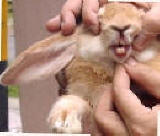
 Inspect your Pet's teeth weekly so problems can be resolved before they cause your Pet to stop eating. Cuddle your rabbit in your lap and gently pull up the front lip to visualize the incisors. You can use a rubber spatula to gently move the lips. Rear teeth are harder to visualize and so you must rely on your ability to read your Pet's body language and watch how much they are eating. If you notice the amount of food your rabbit is eating has decreased immediately become concerned and call your veterinarian! Inspect your Pet's teeth weekly so problems can be resolved before they cause your Pet to stop eating. Cuddle your rabbit in your lap and gently pull up the front lip to visualize the incisors. You can use a rubber spatula to gently move the lips. Rear teeth are harder to visualize and so you must rely on your ability to read your Pet's body language and watch how much they are eating. If you notice the amount of food your rabbit is eating has decreased immediately become concerned and call your veterinarian!
|

 Print
Print Improving Relationships
between People and Pets!
Improving Relationships
between People and Pets!